
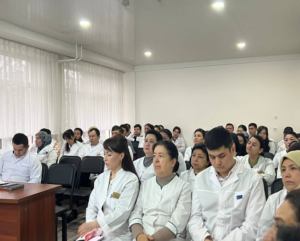

Participants: Professor Rizamukhamedova M.Z.; Associate Professors: Matchanov S.X., Djuraeva E.R., Abduazizova N.X., Agzamova G.S., Sultanova M.X., Midasov M.M., Muxammadieva S.M., Khidoyatova M.R., Bekenova G.T., Kenjaboev D.K., Sagatova D.R., Pulatova Sh.B., Abdiyeva Y.A.; Senior Lecturers: Tashmukhamedova Sh.K., Ziyayeva F.K., Asqarov N.L.; Assistants: Berdiyeva D.U., Ganiyeva N.A., Shiranova Sh.A., Ibragimova N.U., Isroilov A.A., Mirkhamidov M.V., Tashpo‘latova M.M., Boqieva D.R., Tolipov O‘.; master’s students, and doctors from the Rheumatology, Cardioreumatology departments and the Rheumatology Center Polyclinic.
Agenda:
Familiarization with and discussion of the content and essence of the Decree No. PF–71 dated April 21, 2025, of the President of the Republic of Uzbekistan Shavkat Mirziyoyev “On Further Improving the System of Combating Corruption.”
The event was opened by the Head of the Department, Nabieva D.A. She then provided detailed information about the main content and essence of this Decree, the priority tasks outlined in it, and the measures aimed at improving the anti-corruption system. In her speech, she emphasized that corruption negatively affects the development of society, the public administration system, and the effectiveness of the healthcare system. She also noted that this Decree is one of the important documents aimed at ensuring openness, transparency, and the rule of law in the fight against corruption.
The Head of the Department gave a detailed explanation of the tasks defined in the Decree, particularly ensuring transparency in the activities of state bodies, further improving the system for working with citizens’ appeals, preventing conflicts of interest, and forming an uncompromising attitude toward corruption cases. After that, the professors and teachers of the department as well as the doctors expressed their opinions during the event.
Associate Professor Matchanov S.X., in his speech, emphasized the importance of preventing corruption in the healthcare system and strictly adhering to the principles of fairness and honesty in the process of providing medical services. He also noted that medical workers must follow medical ethics in their professional activities and strictly observe the principles of honesty in their relations with patients.
Associate Professor Djuraeva E.R. stressed the importance of forming an anti-corruption legal culture among young specialists, master’s students, and students. In her opinion, it is important to regularly explain to students the negative consequences of corruption and educate them in the spirit of honesty, justice, and responsibility.
Doctor Alimova N.Z. pointed out that ensuring transparency in the educational process and using fair and impartial criteria when assessing students’ knowledge is one of the important factors in preventing corruption. During the event, master’s students also expressed their opinions. They noted that the reforms being carried out to combat corruption are of great importance for young people, especially ensuring openness and transparency in the educational process. In addition, the doctors of the Rheumatology Center Polyclinic expressed their views on this issue, emphasizing that treating patients fairly and honestly while providing medical services and preventing corruption are the fundamental duties of every medical worker.
At the end of the event, all participants noted that combating corruption is one of the priority directions of state policy and that every employee must comply with the law in their professional activities and adhere to the principles of honesty and responsibility.
Resolution:
-
The content and essence of the Decree No. PF–71 dated April 21, 2025, of the President of the Republic of Uzbekistan should be thoroughly studied by the professors, teachers, master’s students, and doctors of the department.
-
Awareness-raising and explanatory activities on combating corruption should be carried out regularly in the department.
-
Strict adherence to the principles of transparency, impartiality, and fairness in the educational process should be ensured.
-
Round-table discussions and educational events aimed at forming an anti-corruption legal culture among students, master’s students, and young specialists should be organized.
-
Department staff should maintain an uncompromising attitude toward any form of corruption in their activities and strictly adhere to the principles of legality, honesty, and responsibility.